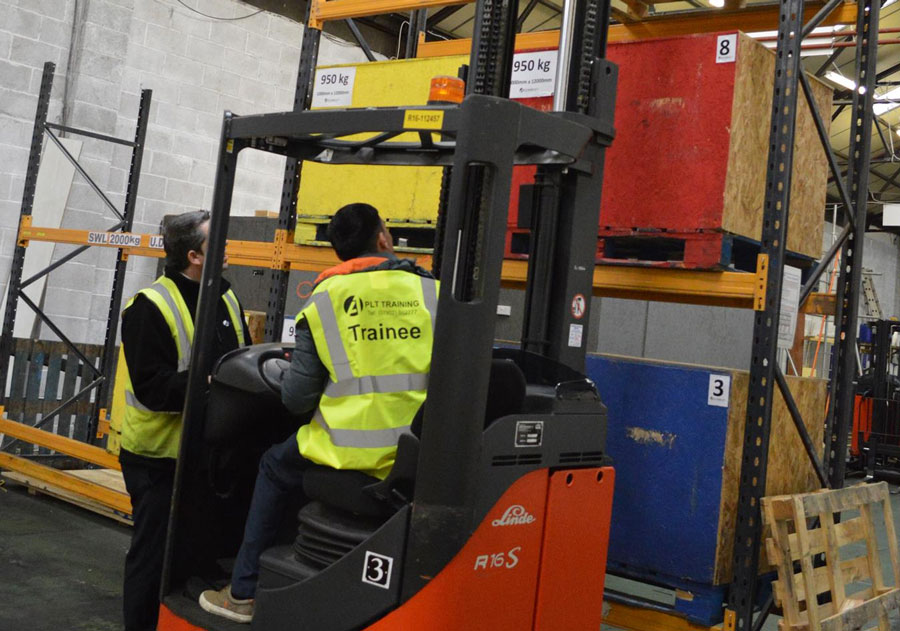
Reach Forklift Uses
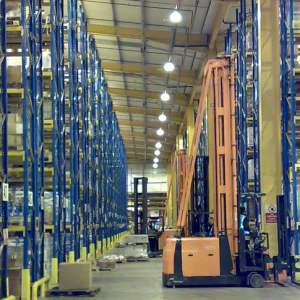
Reach forklifts are mainly used indoors specifically for aisles in warehouses as they can manoeuvre through tight spots/aisles whilst being able to lift loads above 3 meters to load and unload on the racking systems.
Main Areas of Reach Forklift Training
The set up of this course is split into the three areas which are the Theory, Pre-Inspection and Practical.
- During the theory our instructors goes through the key relevant Health & Safety legislations, and the specific information regarding safety operation of the Reach forklift.
- Pre-Inspection of the Reach forklift helps delegates to identify the importance of carrying out checks before operating the truck, and the importance of reporting defects.
- The practical element focus is on practicing to operate the truck safely and correctly accordingly to what the task is.
Learning Objectives / Topics Covered:
Theory
- Need to train
- Health and Safety at Work Act 1974 – Employers & Employees Duties
- Provision and Use of Work Equipment Regulations 1998 (PUWER)
- Lifting Operations and Lifting Equipment Regulations 1998 (LOLER)
- Principle of counterbalance
- Rated Capacity/Load centres
- Understand the causes of instability of lift-truck and load.
- Operators safety code
- Relevant films
- Theory test
Practical
- Carry out a pre-use inspection checks
- Battery charging and maintenance
- Basic steering
- Advanced steering (chicane, confined areas)
- Elementary use of hydraulic controls
- Loading and unloading a vehicle (if required)
- Use of industrial racking systems
- Use of free standing stacks (if required)
- Stacking and de-stacking at all level from ground to high levels
- Operators practical skills test
Benefits of training:
- Teaches necessary skills and relevant job safety knowledge required for the safe operation of a reach forklift.
- Encourages future good practice in order to maintain and promote these skills.
- Creates a safe working environment and procedures within the working area of reach trucks and their operator.
- Conforms with all relevant statutory procedures ( e.g. Health and Safety at Work Act 1974, and relevant Approved Codes of Practice ).
- Provides greater productivity and cost saving as a direct result, and maintenance of the training standards.
Next Steps
Successful completion of counterbalance forklift training qualifies delegates to operate Reach forklift trucks in most environments. To further their skill, operators may seek other specific forklift training courses, such as counterbalance forklift training.
Training Location
Training for individual delegates takes place at our head office. For groups of up to 3 people, we can provide training at your workplace. To discuss your personal training requirements please call us now on 01902 862777.
Price
PLT Training Centre:
- Novice course (up to 5 days): £465.00 per person
- Refresher (1 day): £180.00 per person
- Experienced course (up to 3 days): £360.00 per person
- Conversion (up to 2 days) £275.00 per person
Offsite:
- £355.00 per day (up to 3 people)
- Additional Accreditation Charges:
- ITSSAR or RTITB registration: £12 per person
- Photo ID card: £5
Reach Truck Training Course FAQs
Is a reach truck a forklift?
Yes, a reach type is a type of forklift which is designed for warehouse environments. Reach trucks, unlike standard counterbalance forklifts, are featured with an extending masts which enable the truck to ‘reach’ into the racking. This means that the reach truck is able to work in narrow aisles and for lifting loads to both tall and low heights. Although standard counterbalance forklifts are also designed to move and stack pallets, reach trucks are designed specifically for indoor storage where the space is likely to be a lot tighter.
What is a reach truck used for?
A reach truck is designed for lifting, moving and storing pallets, usually within an indoor warehouse, storage facility or distribution centre. It is designed for handling pallets at various heights, by reaching in and drawing out, along with raising and lowering loads to move them where needed.
What does a reach truck look like?
A reach truck has a small and upright design; featuring a tall mast and extended forks that slide forward and backwards to lift, lower and maneuver the loads. Unlike traditional forklifts, it doesn’t feature a large counterweight at the back of the truck, which means it can function in narrow aisles and tighter spaces. The reach truck operator will usually sit or stand sideways for better visibility when handling and stacking the pallets at height.
How to get a reach truck licence?
In order to obtain your reach truck certification, you will need to complete an accredited reach truck training course with a qualified provider, such as PLT Training. Our Reach Truck Training Course covers theory, safety checks and practical operation to ensure you are able to use a reach truck safely and confidently in all scenarios. At PLT Training, we offer a fully accredited Reach Truck Training Course which has been designed for both beginners and experienced operators. Give us a call on 01902862777 to learn more about our Reach Truck Training Course.
How much does a reach truck cost?
Generally, in the UK, a new electric reach truck can cost from around £22,000 to over £41,000, whereas a used reach truck can cost anywhere from £1,000 to over £30,000. Prices can vary depending on lift height, load capacity and whether the reach truck is electric or powered by diesel.
How much do reach truck operators make?
On average, reach truck operators tend to earn around £21,000-£28,000 per annum for standard roles. Hourly rates come to around £12-£14 per hour, however workers can often earn a higher pay working overtime or night shifts if available. As you gain more experience and specialised skills, such as very narrow aisle operations or working in high-cost areas, earning of up to £30,000 per annum or more is possible.
Can electric reach trucks be used outside?
Standard electric reach trucks cannot be used outside, but some manufacturers design electric reach trucks which allow for mixed-use indoors and outdoors. For outdoor operations, however, a counterbalance forklift or all-terrain truck is usually an ideal choice. At PLT Training, we offer a range of forklift training courses which are designed to help you choose and operate the right equipment safely and efficiently.